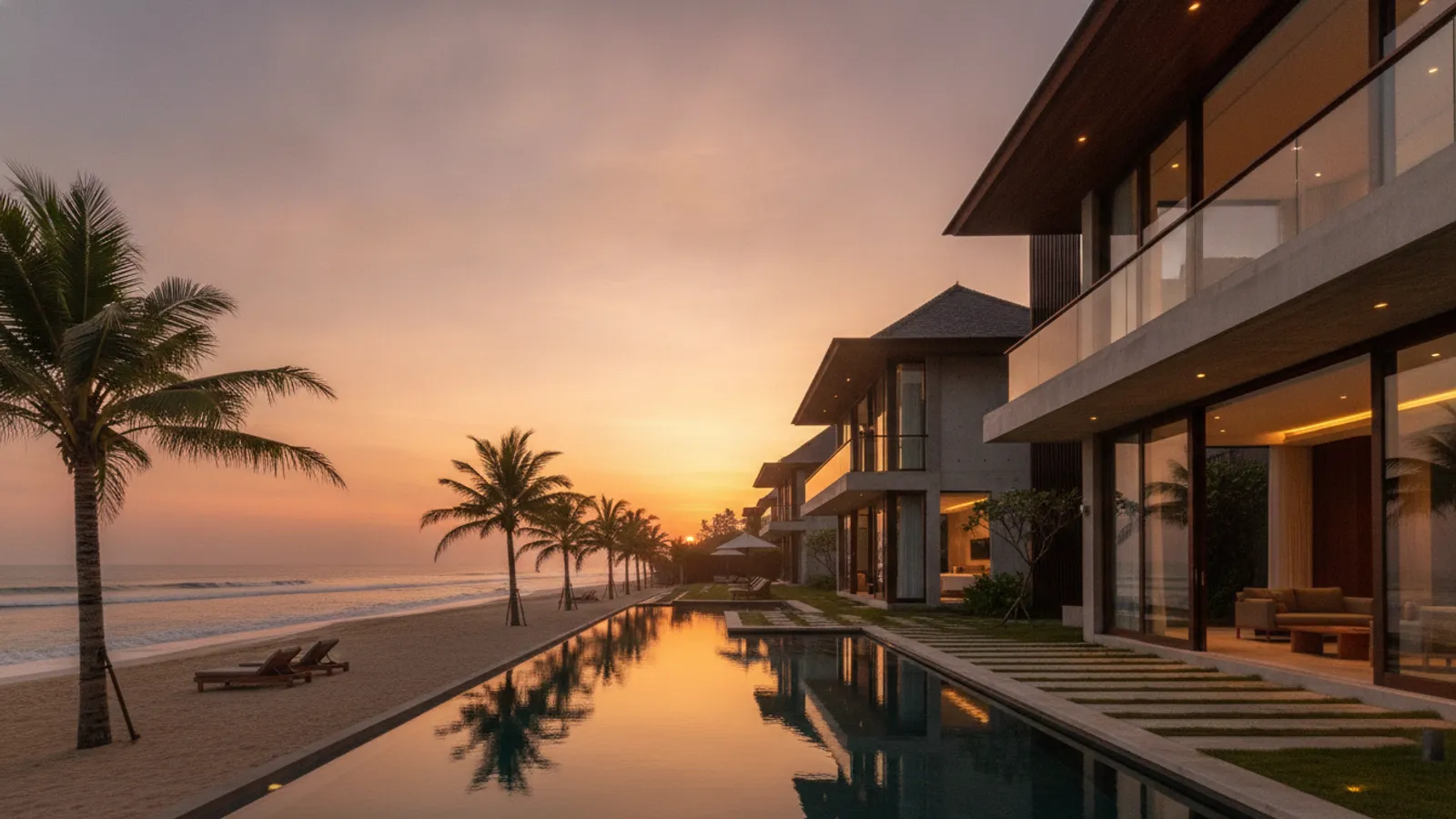
Bali in 2026 is not the Bali of glossy Instagram villas from five years ago. The island has matured into one of the most competitive villa markets in Southeast Asia, and buyers have become far more discerning. The infinity pool and the concrete box are no longer enough. What sells now is a specific look and a specific promise: a home that feels like it grew out of the tropics rather than being dropped onto them.
This year the dominant language is tropical modernism — clean architectural lines married to raw natural materials, deep shade, cross-ventilation and a seamless flow between inside and out. It is a style that photographs beautifully, lives comfortably in the heat, and reassures investors that a property will still look current in a decade. In this guide we break down the trends defining Bali design in 2026, who is buying into each of them, and how you can visualize these ideas fast enough to win a pitch or close a listing.
If you are building, renovating or selling on the island, understanding these trends is the difference between a villa that rents itself and one that sits on the market. Whether your project is in the surf-and-startup energy of Canggu, the clifftop drama of Uluwatu, or the polished commercial buzz of Seminyak, the same design vocabulary is quietly setting the standard.
Tropical Modernism: Why It Wins in 2026
Tropical modernism has become the default aesthetic for high-end Bali projects for a simple reason: it solves real problems while looking effortlessly premium. The style takes the discipline of mid-century modernism — flat or gently pitched roofs, horizontal massing, generous glazing, honest structure — and adapts it to a climate that is hot, humid and wet for much of the year.
The result is architecture that works with the environment. Deep overhanging roofs throw shade across terraces and glass walls, keeping interiors cool without relying entirely on air conditioning. Open floor plans let the sea breeze move through the house. Materials are left raw and tactile rather than painted and sealed. Everything feels calm, uncluttered and rooted in place.
For buyers, tropical modernism signals quality and longevity. Trend-driven interiors date quickly, but a well-proportioned modernist villa with teak, stone and greenery ages gracefully. That timelessness is exactly what a nervous investor wants to hear when committing to a build or a purchase. It is also endlessly photogenic, which matters enormously in a market where the first viewing almost always happens on a phone screen.
Crucially, tropical modernism scales. It works for a compact two-bedroom rental in Canggu just as well as for a sprawling clifftop estate in Uluwatu. That flexibility is why it has become the safe, smart default across the whole Bali market in 2026.
Natural Materials: Teak, Volcanic Stone, Alang-Alang and Rattan
If tropical modernism is the grammar, natural materials are the vocabulary. In 2026 the palette that defines a premium Bali villa is warm, textured and unmistakably local.
Teak remains the hero timber. Reclaimed and sustainably sourced teak appears as flooring, cladding, joinery, door frames and furniture. Its rich grain and honeyed tone bring instant warmth, and its durability in humidity is unmatched. Buyers recognize teak as a marker of authenticity and value, and designers increasingly leave it in its natural state rather than staining it dark.
Volcanic stone — grey andesite and darker basalt drawn from Bali's own volcanoes — is everywhere in 2026. It is used for feature walls, pool surrounds, bathroom vanities, stepping stones and entire facades. Its matte, slightly porous surface reads as grounded and elemental, and it pairs beautifully with teak's warmth. Green sukabumi stone continues to dominate pool interiors, giving that signature jade-green water so associated with the island.
Alang-alang (the traditional dried grass thatch) is having a considered revival. Rather than roofing an entire villa, architects now use alang-alang selectively — over a bale (open pavilion), a yoga deck or an outdoor lounge — to add texture and a sense of ritual without the maintenance headaches of a fully thatched roof.
Rattan and natural fibers carry the theme indoors. Woven rattan screens, cane furniture, jute rugs and light natural linens soften the harder architecture and reinforce the handmade, artisanal feel that international buyers pay a premium for.
The combination matters as much as the individual materials. A 2026 Bali interior layers teak against raw stone against woven fiber against green foliage, so that every surface has something to touch and every photo has depth.
Indoor-Outdoor Living: Dissolving the Walls
Nowhere is the Bali lifestyle promise more literal than in the collapse of the boundary between inside and outside. In 2026 this is not a feature — it is the entire point.
Sliding and pivoting glass walls open living rooms directly onto terraces and pools. Kitchens spill into covered outdoor dining pavilions. Bathrooms open to private walled gardens with outdoor showers under the sky. The best villas are designed so that, on a good day, you can barely tell where the architecture ends and the garden begins.
This works because of Bali's climate and because of how people actually use these homes. Owners and renters come for the feeling of living in the tropics — bare feet on stone, morning coffee to the sound of birds, dinner in the open air. Architecture that delivers that experience commands higher rents and stronger emotional buy-in from purchasers.
Practically, indoor-outdoor living means fewer, larger openings; level thresholds so floors run continuously from inside to out; covered transition zones that stay usable in the rain; and careful planning of privacy so that openness never feels exposed. Done well, it makes even a modestly sized villa feel expansive. This is a signature of high-performing rentals across Canggu and the villa belts of Seminyak, where guests are paying specifically for that dissolved-wall experience.
Sustainability and Passive Cooling
Sustainability in Bali 2026 has moved past greenwashing and marketing badges. Buyers — especially younger international ones — now ask pointed questions about energy, water and materials, and developers who have real answers close deals faster.
The most important sustainability strategy is also the oldest: passive cooling. Instead of fighting the climate with oversized air conditioning, well-designed villas work with it. Deep roof overhangs and shaded verandas keep direct sun off the building envelope. Cross-ventilation, driven by strategic openings and high ceilings, moves hot air up and out. Orientation is planned so bedrooms avoid the worst afternoon heat. The payoff is genuinely lower running costs and a smaller carbon footprint — a story that both owner-occupiers and rental investors like to tell.
Beyond passive design, the 2026 checklist increasingly includes solar panels sized to offset pool pumps and cooling, rainwater harvesting and greywater recycling for irrigation, biological wastewater treatment, and locally sourced materials that cut transport emissions. Reclaimed teak and locally quarried volcanic stone tick both the aesthetic and the sustainability boxes at once, which is a big part of why they dominate.
There is a hard commercial logic here too. Bali faces real constraints on water and waste infrastructure, and regulation is tightening. Villas designed to be genuinely self-sufficient are more resilient to those pressures and more attractive to a buyer thinking about the next ten years, not just the next season.
Wellness-Oriented Design: Yoga, Spa and Pool
Bali's global identity is inseparable from wellness, and in 2026 that identity is baked directly into architecture. A villa is no longer just a place to sleep — it is expected to support a way of living.
Yoga and meditation spaces are now a near-standard request. That might be a dedicated open-air deck with an alang-alang roof, a shaded pavilion facing the garden, or simply a flexible calm room with good light and ventilation. The key is a space that feels intentional and serene.
Spa and bathroom design has become a showpiece. Expect large walk-in rain showers, freestanding stone or terrazzo tubs, outdoor bathing gardens, and materials — volcanic stone, teak, sukabumi — chosen for how they feel underfoot and against skin. The bathroom is now one of the most photographed rooms in a listing.
The pool remains the emotional center of the property, but its role has expanded. Beyond the infinity edge, 2026 sees more lap pools for genuine exercise, cold plunge pools paired with saunas for recovery rituals, and pools positioned as the visual anchor that every indoor-outdoor space opens onto. Green sukabumi tiling, natural stone decks and mature planting turn the pool area into a private resort.
This wellness layer is not decorative. It is precisely what allows a Bali villa to charge resort-level nightly rates and to market itself as a lifestyle rather than just accommodation — a positioning that works especially hard in Uluwatu, where the clifftop-and-sunset backdrop amplifies the whole experience.
What Investors Actually Buy in 2026
Trends are only useful if they map to money. Here is what is actually moving in the 2026 Bali investment market, and how the design trends translate into buyer demand.
| Trend | What it looks like | Who wants it |
|---|---|---|
| Tropical modernism | Clean lines, flat roofs, teak and stone, open plans | Design-led investors, ROI-focused developers |
| Natural materials | Reclaimed teak, volcanic stone, rattan, alang-alang accents | Luxury buyers, boutique villa operators |
| Indoor-outdoor living | Sliding glass walls, level thresholds, garden bathrooms | Rental investors, lifestyle second-home buyers |
| Sustainability & passive cooling | Solar, rainwater, deep overhangs, cross-ventilation | Younger international buyers, eco-conscious renters |
| Wellness design | Yoga decks, spa bathrooms, lap and plunge pools | Wellness-tourism operators, long-stay guests |
The pattern across the table is consistent. Investors in 2026 are buying experiences that generate income, not just square meters. A villa that delivers a photogenic, comfortable, low-running-cost, wellness-forward lifestyle can charge premium nightly rates, maintain high occupancy, and hold its value as the market matures. The design trends above are simply the most reliable routes to that outcome.
Location still shapes the buyer profile. Canggu draws younger, design-savvy investors chasing high rental turnover. Seminyak attracts commercial and boutique operators who value polish and footfall. Uluwatu commands the luxury and view-premium end. But in every submarket, the same tropical-modern, natural, indoor-outdoor, sustainable, wellness-driven vocabulary is what buyers now expect as standard.
How to Visualize These Trends Fast for Pitches and Listings
Here is the practical problem. You understand the trends, you have a plot or a project, and you need to show a client or a buyer what it will look like — before anyone has spent tens of thousands on a full architectural render package. Traditional 3D visualization takes days and costs hundreds to thousands of dollars per image. That is far too slow and too expensive when you are testing ideas or trying to win a pitch.
This is exactly where Tropico Render changes the math. Upload a sketch, a floor plan, a rough SketchUp model or even a reference photo, describe the tropical-modern look you are after — teak cladding, volcanic stone walls, an open pavilion with an alang-alang roof, an infinity pool with sukabumi tiling — and get a photorealistic render back in roughly 30 to 60 seconds. Each render costs about one dollar.
That speed and price completely change how you work:
- Pitch faster. Walk into a client meeting with three visualized concept directions instead of a verbal description.
- Iterate live. A client wants to see the stone darker, the roof deeper, the pool bigger? Regenerate on the spot instead of scheduling another studio round.
- Sell off-plan. Turn a plot and a floor plan into aspirational listing imagery that shows buyers the finished tropical-modern dream, not a construction site.
- Test the trends cheaply. Try natural-material palettes, indoor-outdoor configurations and wellness layouts side by side before committing to anything expensive.
For agents and developers across Bali, this means every listing and every pitch can carry the polished, on-trend imagery that buyers now expect — without a specialist studio, a big budget or a week of waiting. The trends in this article are what the market wants; fast, affordable visualization is how you show that you deliver them.
Bali's 2026 direction is clear: warm, natural, open, sustainable and wellness-driven tropical modernism. The winners this year will be the builders, designers and agents who not only understand that language but can show it instantly, at the speed the market now moves.