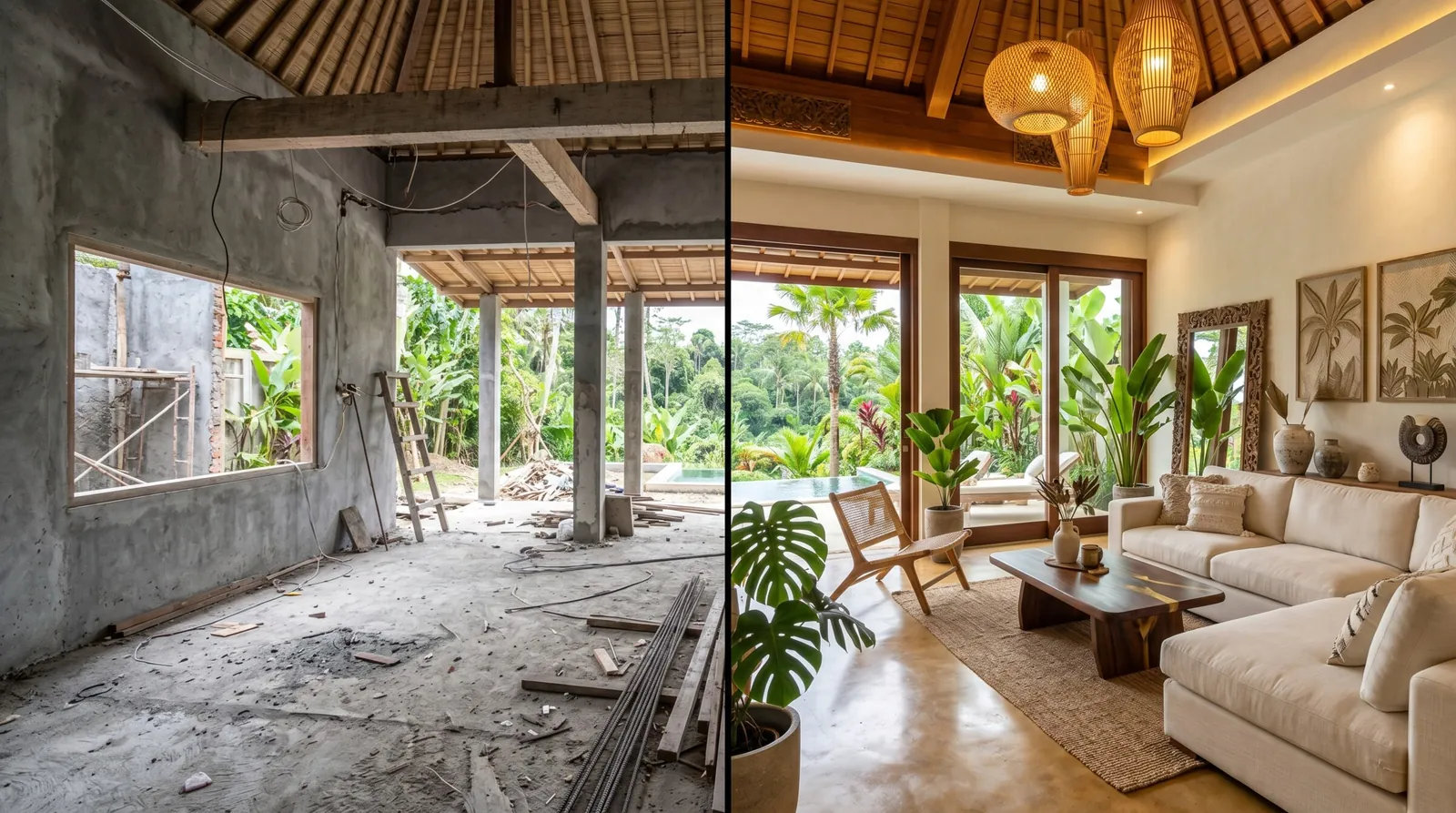
Here's an uncomfortable truth about winning design work: clients don't buy your drawings — they buy what they think your drawings mean. And most clients can't read a sketch or a plan. Show them lines on paper and they nod politely while quietly worrying. Show them a photorealistic picture of the finished result and they lean in, get excited, and say yes. This guide is about closing that gap — turning your sketch into a photo that sells the project.
Why sketches lose deals
You can see the finished building in your sketch because you're trained to. Your client cannot. When you present a drawing, several things go wrong at once:
- The client can't picture the result, so they hesitate.
- They fixate on the wrong details ("why is that line there?").
- They can't compare options, so they can't decide.
- They undervalue the work — a sketch looks cheap, so they negotiate you down.
None of this reflects the quality of your design. It reflects the format you presented it in. A better format changes the outcome without changing the design.
What changes when you show a photo
Replace the sketch with a photorealistic image and the whole conversation shifts:
- The client instantly gets it — no translation needed.
- They react emotionally, which is how buying decisions are actually made.
- They can compare two versions and choose confidently.
- The work looks premium, so your price feels justified.
You're not tricking anyone — it's the same design. You've just presented it in the language your client speaks: pictures, not lines.
The workflow: sketch to presentation-ready photo
1. Start with your sketch or model
Whatever you already have works — a hand sketch, a SketchUp export, a floor plan, a rough massing model. You don't need to build a detailed 3D scene.
2. Upload it and flag it as a drawing
Upload your image and mark it as a drawing or 3D model. This tells the tool to treat it as the shape of the design and render realistic materials, light, and surroundings around it — instead of preserving the technical look.
3. Describe the finished result
Add the atmosphere the sketch can't carry:
"Modern house, concrete and warm timber, big glazing, golden-hour light, landscaped garden, calm and premium feel."
This is where your design intent becomes a mood the client can feel.
4. Generate a small set
Produce your key views — the hero exterior, maybe an entrance view and one interior. Keep the style consistent across them so the set feels like one project photographed on one day.
5. Present with confidence
Show the photos, not the process. Let the client react, then use their reactions to guide refinements — "warmer light," "add a pergola" — live, in the meeting.
Charge more with better presentation
This is the part that pays for itself immediately. When your presentation looks premium, your price stops feeling like a negotiation:
- Perceived value rises. A photorealistic deck signals a serious, professional service.
- Approvals speed up. Clients decide faster when they can see the result, so projects start sooner.
- Fewer revision rounds. They're reacting to a realistic image, not imagining — so misunderstandings surface early and cheaply.
- You can add a visualization line item. Many designers now bill visualization separately, turning a former cost into revenue.
The math is stark: visualization costs around a dollar per picture, and a strong presentation can be the difference between a signed project and a polite "we'll think about it."
For different kinds of professionals
Architects & designers. Present concepts as photos to win the commission, then keep using visualizations through the project to align on materials and light. See the full Bali villa case study for an end-to-end example.
Renovation contractors. Show clients the "after" before quoting — it makes your bid concrete and your price defensible. See renovation visualization.
Real estate agents. Present a property's potential, not just its current state, to move listings faster.
A note on honesty
Present the design you'll actually deliver. A visualization should represent the real project — right proportions, realistic materials, honest scale. Used this way, it's not overselling; it's simply communicating clearly. Clients who feel misled don't come back, and referrals are worth more than any single deal.
Start with your next pitch
Before your next client meeting, take the sketch or model you'd normally present and turn it into a photorealistic picture first. Present the picture. Watch how differently the conversation goes — and how much easier it is to hold your price.
If you build homes from scratch, see home rendering online. For fast turnaround without any 3D software, read fast architectural visualization online.